From ghastly depression, to promises of a new and beautiful country made by a man who would later be associated with some of the most gruesome acts in world history, Germany has definitely led what some might call an infamous existence. But those people fail to recognize the colossal achievements, specifically in the automotive industry, that have been made in this country. Karl Benz created the first gasoline-powered car: the Benz Patent Motorwagen, in Stuttgart in 1886. The Bavarian Motor Works company, which first began producing airplane engines in 1918 has grown to produce some of the most highly acclaimed luxury performance cars on the market. And the Porsche family created a legendary sports car: the 911. Ferdinand Porsche began designing cars after being contracted by Adolf Hitler. Hitler wanted Porsche to create a "People's car," and he did. Not to gloss over the story of the indisputably legendary Beetle, but the car that really would capture the attention of enthusiasts for years to come was in the design process soon after World War II. This car was the Porsche 356.
 The 356 was the first car to be produced under the Porsche name, and officially began production in 1948. Available with an array of tiny four-cylinder air-cooled engines, mounted at the back, the rear-drive lightweight proved to be an excellent performer for its time. Designed on a monocoque chassis, the 356 was available as a coupe or cabriolet, and the smooth, swooping body lines have made it a highly-desirable collector car for the present-day.
 After Ferdinand Porsche's death in 1951, design was taken over by Ferry Porsche. The company became very successful in motor racing and in 1964 Ferry's son Ferdinand Alexander launched his new design for the rear engine, rear-drive sports car that is still being produced today: the 911. The 911 quickly became one of the most well-known sports cars in the history of sports cars. With a big six-cylinder boxer engine over the rear wheels, handling of early models of the 911 was unpredictable at best, and made worse with Turbo models. But, sticking to Porsche tradition, engineers have been able to fine-tune the 911 and all of its exciting variations into one of the best handling sports cars that money can buy.
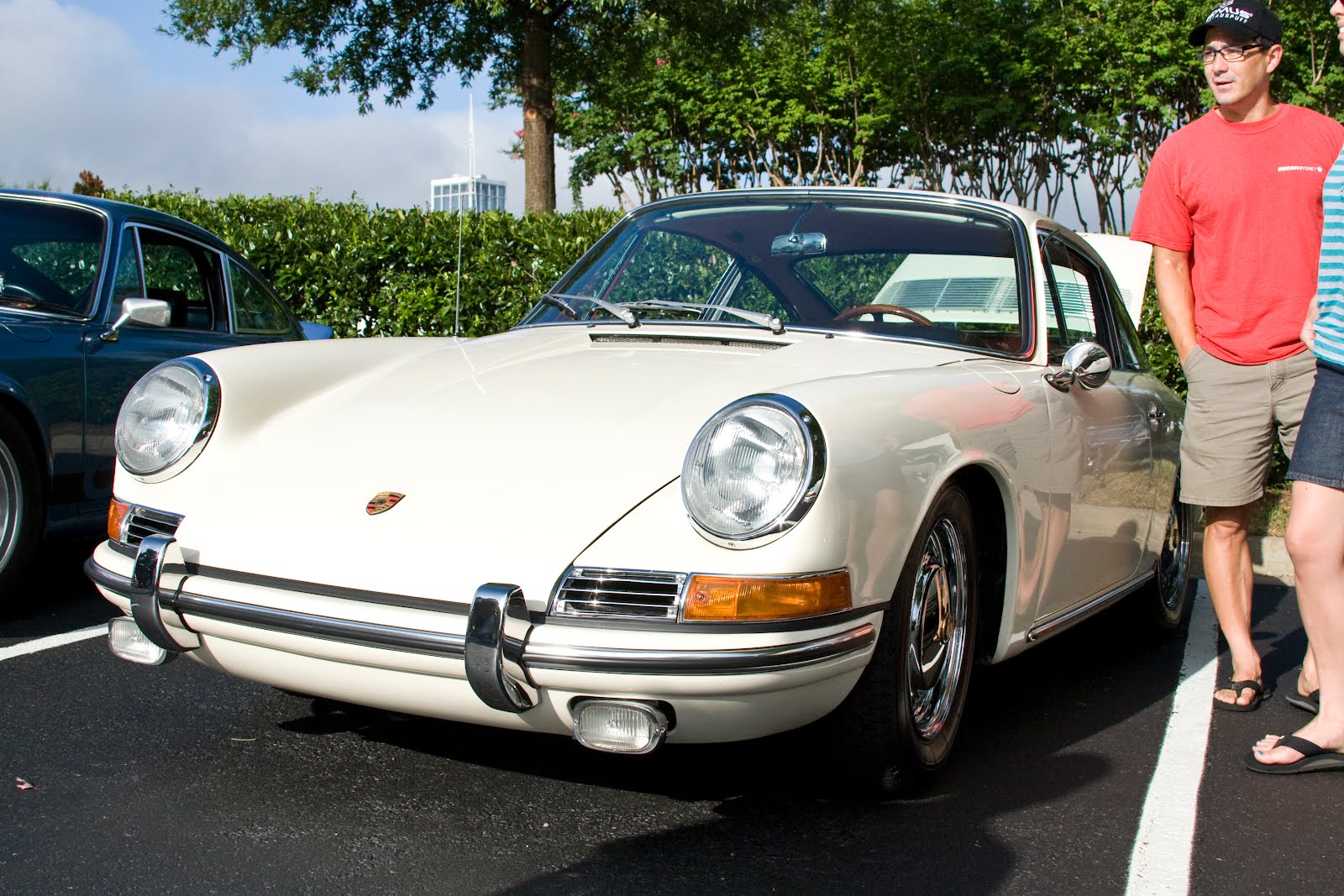
 Take the early morning drive to the Caffeine and Octane monthly meet up and you can see a vast array of these amazing machines. So many examples of every decade of 911 are on hand and all of them are beautifully restored. As you move along the rows of the Porsche section, you see that not much changes from decade to decade, as far as the sheetmetal goes, but maybe that's a good thing. Porsche could have just moved their engine to the front of the 911, but they didn't, and thank goodness they didn't.