For Day Five, Part One: Old City Montreal, click here.
I'll start by saying that if you're not going to Montreal in late fall, you're definitely missing out. The entire region of eastern Canada, where most of the country's population lies, experiences peak fall color between mid-October and early November. I managed to catch Montreal at its peak time, and the colors blazed even on the greyer days I spent in Quebec.
Today started out looking like it would be just that: a grey, rainy day. I'd taken my car across town to visit the Montreal Botanical Gardens. This 190-acre park first opened in 1931, and is nestled in the ethnically-diverse borough of Rosemont-La Petite-Patrie. Nowadays, the gardens face Montreal's aging Olympic Stadium, which can be seen from anywhere in the eastern half of the garden.

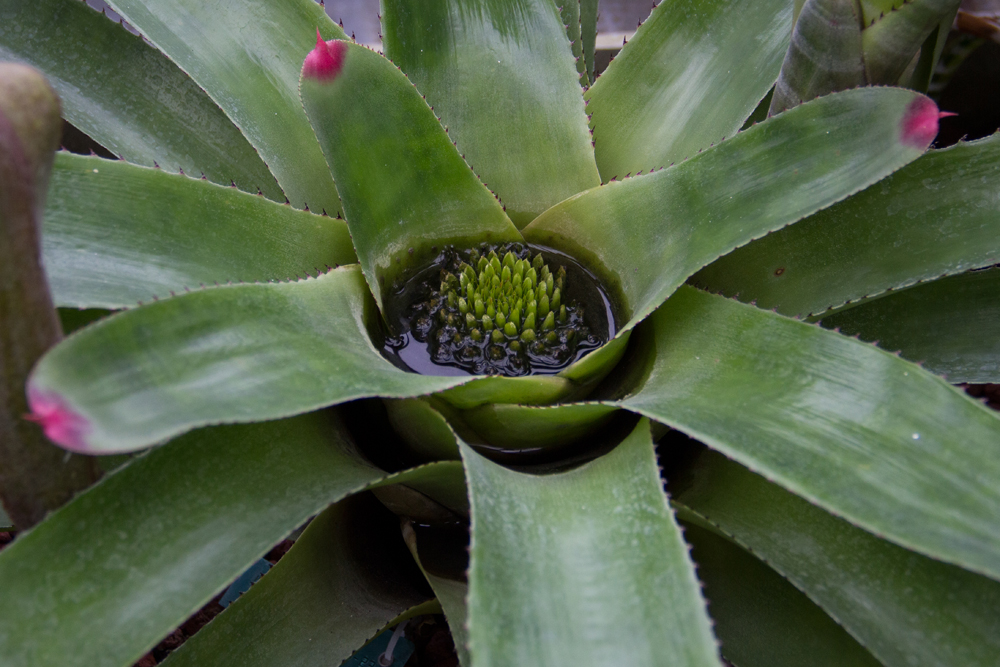
My self-guided tour started inside the main greenhouse, which is original to the property. The park charges a modest fee for admission, but residents can obtain a pass allowing for free access at any time. This makes sense, as the botanical gardens are nestled among two other large parks, and make for a relaxing departure from city life. Inside the greenhouse, plants from around the world are housed in separate rooms and allowed to sprawl freely. In several spots, I found myself ducking under vibrant purple ivy-lined limbs and zig-zagging through giant fern fronds.


Touring the greenhouse didn't take long, and when I got back outside, I was greeted by the clearest sky I'd seen since arriving in Canada. I followed a tree-lined path towards the rose garden and found myself stopping every few feet to snap pictures of the surreal display of oranges, reds, and yellows.


The rose garden was out of season, but a gardener still picked blades of grass and leaves from the plots. These acres of gardens are manicured by a large and largely unseen army of workers, and it shows. Never have I been somewhere that felt at once so vast and meticulously maintained.

I decided to walk over to the Chinese garden next. Dozens of lanterns marked the way to a garden lush with flowers and turquoise water. Built in 1990, the garden features two Chinese buildings, one of which was being refurbished, but the larger of the two was open, and had an artfully detailed ceiling with a magnificent lantern hanging in the center. Outside of the larger building, and surrounded by a wall resembling a Chinese dragon, was a fully-stocked bonsai display. Construction of the Chinese garden was led by 50 artisans from the Shanghai Institute of Landscape Design and Architecture, and took a year to complete.


Moving on, I decided the Japanese garden would be a logical next step. Plus it was only a short walk away. I moved on a winding path through the park as was intended by the designers. It's a place where you keep track of time not by a watch or cell phone, but by watching the shadows grow longer as the day goes on. Ken Nakajima, a landscape architect responsible for gardens in Russia, Australia, and Houston, Texas, designed the Japanese garden, which was built in 1988. Staples of this garden include the Japanese-style house, with a zen-inspired interior and central rock garden. There's also a koi pond behind the house, and a tea ceremony performed regularly during the summer.


Winding through the Japanese garden, I took a sharp corner onto a heavily-wooded pathway. This one led to the First Nations garden, which opened in 2001 as tribute to the indigenous cultures of Canada. It felt a lot like walking through the woods in north Georgia, as tall pines, maples, and birches create a dense forest in the middle of the park. Here there are totem poles and an exhibition area for performers and other volunteers who explain the many medicinal plants from the time period. The narrow path took sharp turns, and I was surprised by how accurately it replicated my fear of getting lost on some loosely-marked trails back home.


Thankfully the wooded path soon led uphill to the Alpine garden. This garden was one of my favorites, because it reminded me of my grandparent's mountain home in Bailey, Colorado. It recreates several familiar rocky outcrops with alpine plants native to certain high-elevation spots on earth.


By this point, it was well into the afternoon, and past time for lunch. I found the main path, flanked by mixed gardens and lined with tall, colorful trees. It led to the Restaurant Jardin Botanique, which served tasty soups and sandwiches while entertaining me with an eclectic soundtrack; .38 Special's "Caught up in you" played as I sipped coffee from a tiny mug and watched people sitting outside on the patio.


The garden is a great place to escape the buzz of downtown Montreal, and as I walked to the exit on the western end of the park, I pretended I was a Quebecois going for a walk through his magnificent city. 1600 miles away from home, I felt a distinct disconnect from the America I knew; from the election noise and cheap entertainment and work nonsense. Outside the gates, a group of four kids about middle-school age laughed as they sat in the grass, not worried about the uniforms they'd worn to school clean that morning. It must be nice to grow up here, I thought as I headed back to the hostel.
Next, I head to Downtown Montreal and Mount Royal Park. Check out Part Three here.
I'll start by saying that if you're not going to Montreal in late fall, you're definitely missing out. The entire region of eastern Canada, where most of the country's population lies, experiences peak fall color between mid-October and early November. I managed to catch Montreal at its peak time, and the colors blazed even on the greyer days I spent in Quebec.
 |
| Fiery leaves show no sign of fading in the grey morning outside the Montreal Botanical Garden. |
My self-guided tour started inside the main greenhouse, which is original to the property. The park charges a modest fee for admission, but residents can obtain a pass allowing for free access at any time. This makes sense, as the botanical gardens are nestled among two other large parks, and make for a relaxing departure from city life. Inside the greenhouse, plants from around the world are housed in separate rooms and allowed to sprawl freely. In several spots, I found myself ducking under vibrant purple ivy-lined limbs and zig-zagging through giant fern fronds.
Touring the greenhouse didn't take long, and when I got back outside, I was greeted by the clearest sky I'd seen since arriving in Canada. I followed a tree-lined path towards the rose garden and found myself stopping every few feet to snap pictures of the surreal display of oranges, reds, and yellows.
The rose garden was out of season, but a gardener still picked blades of grass and leaves from the plots. These acres of gardens are manicured by a large and largely unseen army of workers, and it shows. Never have I been somewhere that felt at once so vast and meticulously maintained.
I decided to walk over to the Chinese garden next. Dozens of lanterns marked the way to a garden lush with flowers and turquoise water. Built in 1990, the garden features two Chinese buildings, one of which was being refurbished, but the larger of the two was open, and had an artfully detailed ceiling with a magnificent lantern hanging in the center. Outside of the larger building, and surrounded by a wall resembling a Chinese dragon, was a fully-stocked bonsai display. Construction of the Chinese garden was led by 50 artisans from the Shanghai Institute of Landscape Design and Architecture, and took a year to complete.
Moving on, I decided the Japanese garden would be a logical next step. Plus it was only a short walk away. I moved on a winding path through the park as was intended by the designers. It's a place where you keep track of time not by a watch or cell phone, but by watching the shadows grow longer as the day goes on. Ken Nakajima, a landscape architect responsible for gardens in Russia, Australia, and Houston, Texas, designed the Japanese garden, which was built in 1988. Staples of this garden include the Japanese-style house, with a zen-inspired interior and central rock garden. There's also a koi pond behind the house, and a tea ceremony performed regularly during the summer.
Winding through the Japanese garden, I took a sharp corner onto a heavily-wooded pathway. This one led to the First Nations garden, which opened in 2001 as tribute to the indigenous cultures of Canada. It felt a lot like walking through the woods in north Georgia, as tall pines, maples, and birches create a dense forest in the middle of the park. Here there are totem poles and an exhibition area for performers and other volunteers who explain the many medicinal plants from the time period. The narrow path took sharp turns, and I was surprised by how accurately it replicated my fear of getting lost on some loosely-marked trails back home.
Thankfully the wooded path soon led uphill to the Alpine garden. This garden was one of my favorites, because it reminded me of my grandparent's mountain home in Bailey, Colorado. It recreates several familiar rocky outcrops with alpine plants native to certain high-elevation spots on earth.
By this point, it was well into the afternoon, and past time for lunch. I found the main path, flanked by mixed gardens and lined with tall, colorful trees. It led to the Restaurant Jardin Botanique, which served tasty soups and sandwiches while entertaining me with an eclectic soundtrack; .38 Special's "Caught up in you" played as I sipped coffee from a tiny mug and watched people sitting outside on the patio.
The garden is a great place to escape the buzz of downtown Montreal, and as I walked to the exit on the western end of the park, I pretended I was a Quebecois going for a walk through his magnificent city. 1600 miles away from home, I felt a distinct disconnect from the America I knew; from the election noise and cheap entertainment and work nonsense. Outside the gates, a group of four kids about middle-school age laughed as they sat in the grass, not worried about the uniforms they'd worn to school clean that morning. It must be nice to grow up here, I thought as I headed back to the hostel.
Next, I head to Downtown Montreal and Mount Royal Park. Check out Part Three here.


